


Home
About
Company Profile
Culture
Factory Appearance
Honor
News
Company News
Technical Forum
Industry News
Products
Butyl tin
Octyl tin
Tetrabutyltin
Four octyl tin
Contact
中文版
English
Russian
Arabic
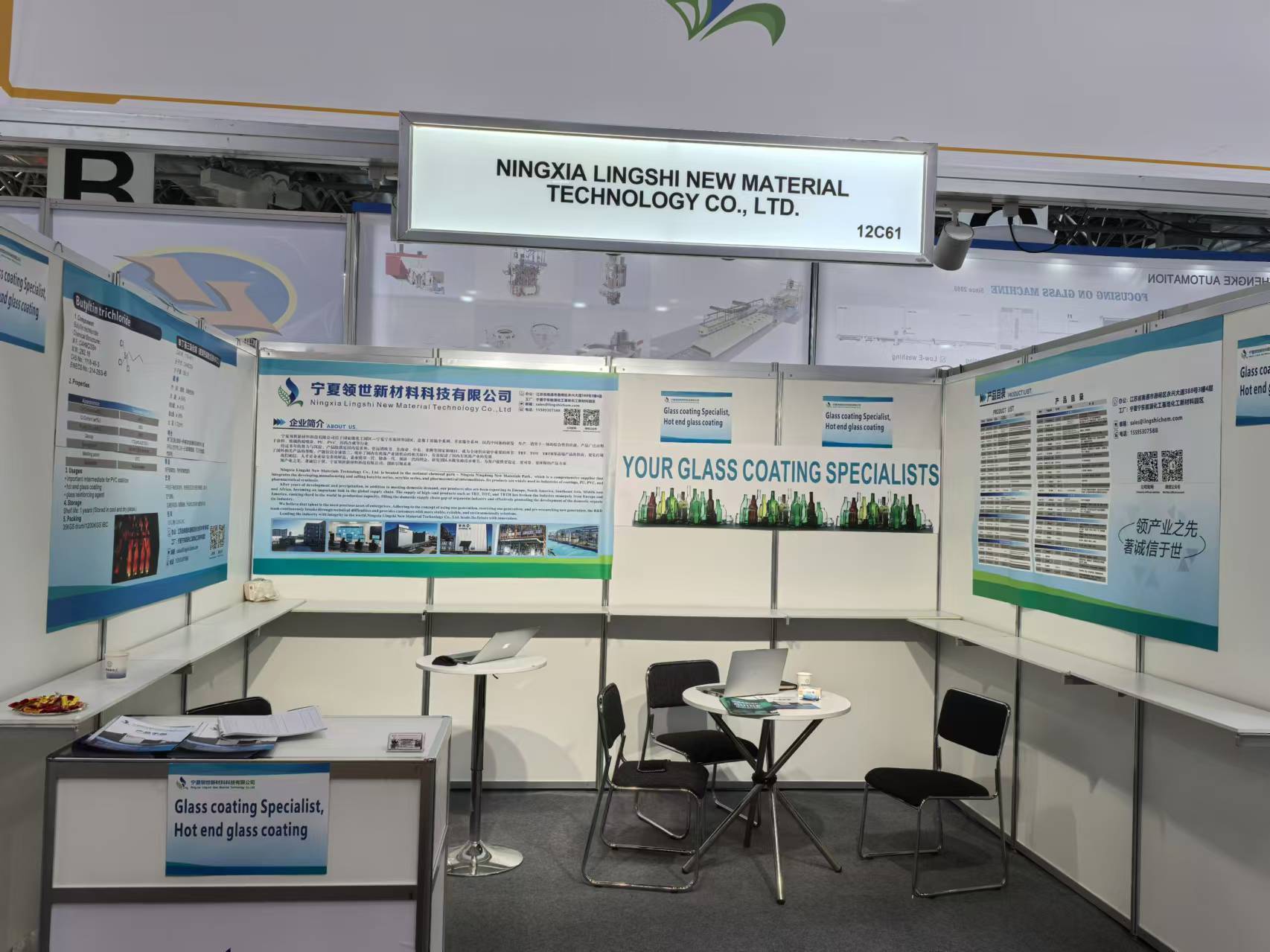
The 27th International Glass Technology Exhibition in Dusseldorf, Germany
23
2024
/
10
What are the organic tin stabilizers? What is the difference
The main difference between various types of organotin stabilizers lies in their chemical structure, mechanism of action and application areas. They have their own characteristics, for example, thiolate stabilizers have the best stabilization effect, while aliphatic acid salts and maleate stabilizers achieve stabilization effects through different reaction mechanisms. In addition, different organotin stabilizers may differ in terms of cost, toxicity, and compatibility with other stabilizers.
08
04
Extraction of organotin compounds
Extraction is the first critical step in organotin sample analysis, especially for complex biological samples, where the target compounds must be selectively extracted from the matrix before instrumental analysis. Common organotin extraction techniques are as follows: non-polar solvent extraction, non-polar solvent plus acid extraction, polar solvent extraction, solid phase extraction, supercritical fluid extraction, alkaline or enzymatic hydrolysis, extraction using chelating reagents, and the recent development of solid phase microextraction techniques.
The development prospect of tetrabutyltin market is good. China's production capacity still needs to be continuously improved.
Tetrabutyltin is a chemical formula of C16H36Sn organic compounds, the appearance of a colorless liquid, insoluble in water, soluble in most organic solvents. Tetrabutyltin production methods are diverse, including Grignard reagent method (Grignard method), alkyl aluminum method, Wu's method, direct method, etc. Among them, the common method for industrial production of tetrabutyltin is the Grignard method, which refers to the method of generating tetrabutyltin by chemical reaction with tin tetrachloride as raw material.
Opening video
01
Material Properties of Rigid Polyurethane Foam
Rigid polyurethane foam (SPF) is a kind of polymer synthetic material with numerous tiny closed cell structures, which is a new type of material integrating waterproof, thermal insulation and heat insulation. Under the action of modifiers, foaming agents, catalysts, flame retardants, foam stabilizers, anti-aging agents and other additives, through the uniform mixing of special equipment, thermal reaction occurs in a certain state, instant atomization, resulting in a rigid foam compound with a closed cell rate of not less than 95%, which has ideal water impermeability and good water vapor permeability resistance. It is widely used in high-rise residential buildings, hotels, cold storage, warehouses and other large building roofs. Its main features are shown below. 1.1 polyurethane rigid foam with reliable waterproof function has a continuous and dense skin and a high-strength honeycomb structure with an interconnected wall with a closed cell rate of more than 95%, ideal water impermeability and good water vapor permeation resistance, and a water absorption rate of ≤ 1%. Using on-site direct spraying technology, a complete continuous impermeable layer can be formed on the roof of the building, thus fundamentally eliminating the possibility of water infiltration along the gap. In addition, the bond with the base layer is firm, the bond strength can exceed the tear strength of the foam itself, will not be separated from the base layer, to avoid water leakage along the layer. 1.2 thermal insulation and high energy-saving efficiency polyurethane rigid foam is a dense structure, closed non-connected pores, its rigid foam micropores are closed with foaming agent gas with extremely low thermal conductivity, which has almost no influence on convection, so the thermal conductivity is lower than 0.022W/(m • k), far lower than the traditional thermal insulation materials, with good thermal insulation performance and obvious energy-saving effect. 1.3 strong bonding performance of the material has excellent bonding performance, the concrete, metal, masonry, wood, glass, fiber and other base surface has a strong bonding strength, bonding strength should be ≥ 100kPa, the bond strength of concrete and masonry can be as high as 240kPa, as the roof waterproof insulation layer has strong wind resistance. 1.4 Chemical resistance strong polyurethane rigid foam in benzene, gasoline and other general solvents and dilute concentrations of acid, alkali, salt solution and other environmental effects have good chemical stability, will not occur mildew and decay. 1.5 strength depends on its raw materials, formula, density, structure and molding process. When other factors are relatively unchanged, the density determines the strength. When the density of SPF hard foam is> 55 ㎏/m3, its compressive strength can be ≥ 300kPa, and its tensile strength can be ≥ 500kPa, which has good impact resistance. 1.6 high quality environmental protection product SPF bubble in the use of no harmful substances volatile, does not pollute the surrounding environment, its chemical properties are stable, has good corrosion resistance, does not decompose, not mildew. 1.7 good temperature resistance and fire resistance SPF bubble has a volume shrinkage rate of less than 1% at a low temperature of -50 ℃, and will not become brittle and crack. Under the condition of 120 ℃, there is no obvious change in volume and strength. At a higher temperature of 150 ℃, the polymer will not degrade, so it can be used at high temperature. It does not have the phenomenon of melting and dripping like EPS or XPS materials, and the rigid foam polyurethane material will form a coking protective layer during the combustion process to inhibit the spread of combustion. High 1.8 elongation at break After modification, the elongation of the sprayed polyurethane rigid foam is as high as 13%, which successfully overcomes the fracture phenomenon of the waterproof insulation layer caused by the uneven settlement of the foundation and the change of environmental temperature difference. The 1.9 is easy to construct, the construction period is short, the SPF foam waterproof insulation layer can be sprayed on site, the operation is convenient, the one-time molding is convenient, and the construction is fast. The curing speed of the material is very fast, and the person can be applied 20min after spraying, which simplifies the overall construction process and shortens the construction period.
27
2023
12